

TOOLS & GUIDES
Dog Chocolate Calculator & Toxicity Guide
Wondering what to do if your dog eats chocolate? Use our dog chocolate toxicity calculator to work out whether an emergency vet visit is required.
Enter your dog's weight, select the type of chocolate consumed, and specify the amount to calculate potential toxicity risk.
This calculator provides estimates only. Always consult with a veterinarian for professional medical advice. In case of emergency, contact your vet or pet poison control immediately.
Understanding Chocolate Poisoning in Dogs
While there are many human foods that can be safely fed to our four-legged friends in small doses, chocolate unfortunately is not one of them. It is toxic to dogs. Chocolate ingestion can result in vomiting, diarrhoea, or even seizures. In severe cases, chocolate toxicity can be fatal.
If you suspect your dog has ingested chocolate, please contact your nearest Sydney emergency vet immediately for medical advice.
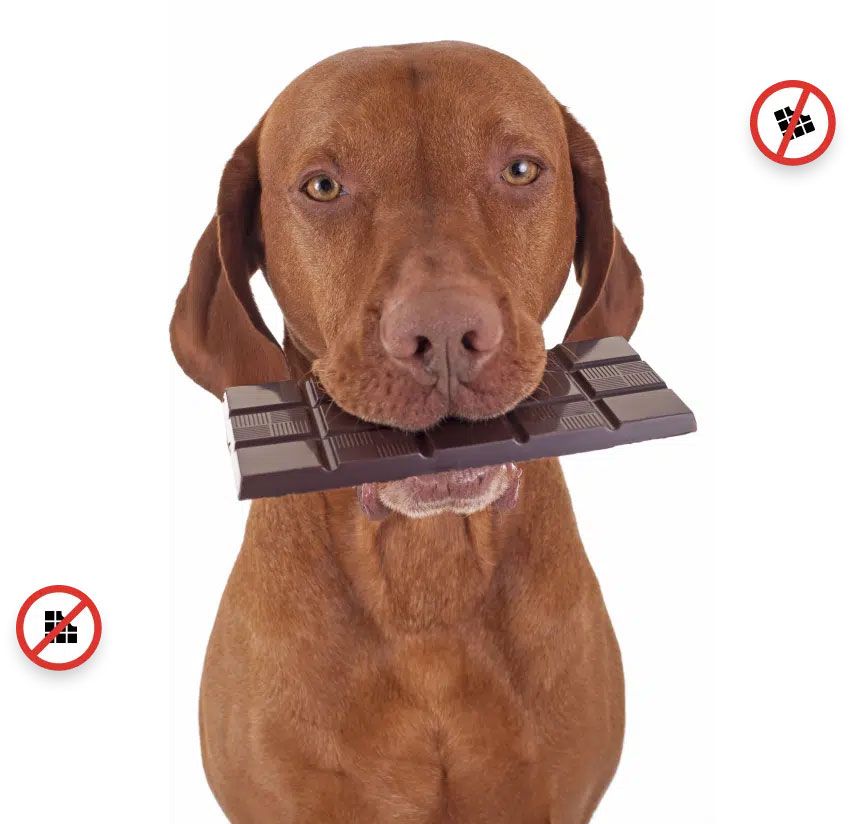

How Much Chocolate Is Toxic for Dogs?
The effect of your dog eating chocolate is determined by a few main factors:
How much your dog weighs
How much chocolate your dog ate
What type of chocolate your dog ate (dark, white or milk)
There is a chemical in chocolate called theobromine, which is similar to caffeine, and is highly poisonous to dogs.
Different types of chocolate contain different amounts of theobromine. However, the general rule is that the more bitter the chocolate, the higher the toxicity to your dog.
How Much Chocolate Can a Dog Eat? A Rough Guide

White chocolate
White chocolate has the least at around 0.25 mg per 28 grams of chocolate

Milk chocolate
Milk chocolate contains 44–58 mg per 28 grams of chocolate

Dark chocolate
Dark chocolate contains between 130–450 mg per 28 grams of chocolate

What Are the Signs of Chocolate Poisoning in Dogs?
Symptoms of chocolate poisoning in dogs can take several hours to show and even longer to disappear. Some clinical signs that your dog may have eaten chocolate are:
Vomiting
Diarrhea
Increased thirst
Excessive urination
Rapid heart rate
Muscle spasms
Seizures
High doses of chocolate ingested can result in cardiac arrest. The heart fails to pump blood effectively and this can lead to sudden death or permanent internal damage if not provided with urgent medical attention.
How Is Chocolate Toxicity in Dogs Treated?
Treatments can vary depending on the amount of chocolate that your dog has eaten. However, if treated early, the first step is to induce vomiting and try to block absorption of the theobromine in your dog’s body.
Depending on the severity of the poisoning, it may be necessary to administer intravenous fluids to help flush out your pet’s system.
How Can You Prevent Dog Chocolate Toxicity?
An easy way to prevent poisoning is to store all chocolate securely, preferably in closed cupboards or sealed containers that your dog can’t access. Avoid leaving it on benches, coffee tables, or anywhere your dog could sneak a bit.
It’s also important to teach kids why chocolate is dangerous for pets and make sure everyone in the household stays alert — especially during high-chocolate seasons like Easter, Halloween, and Christmas, when treats are often left within reach.
Your Dog Ate Chocolate — What to Do Now
If you think your dog has eaten chocolate, take these steps straight away:
- Confirm what’s missing: Check the packaging or leftovers so you know exactly what type of chocolate was involved and roughly how much your dog could have eaten.
- Use the chocolate toxicity calculator for dogs: Enter the chocolate type, amount, and your dog’s weight to calculate chocolate toxicity in dogs and get an instant risk estimate.
- Keep your dog calm: Limit activity and monitor them while you organise the next steps.
- Call Sydney Animal Hospitals: Share the details you’ve gathered so our veterinary team can tell you whether your dog needs urgent treatment or monitoring.
- Follow your vet’s instructions: This may include bringing your dog straight in, watching for specific symptoms, or preparing for prompt treatment on arrival.

Get the Dog Chocolate Toxicity Calculator & Emergency Vet Care at Sydney Animal Hospitals
At Sydney Animal Hospitals, your pet’s safety is always our top priority.
Whether you're seeking urgent advice or treatment for chocolate toxicity, or coming in to find out more about pet poisons in general, we’re here to guide you with clear answers, support, and the expert care your dog needs.
Our compassionate and highly experienced Sydney vets assess and treat chocolate toxicity with precision and care, using modern diagnostic tools, proven treatment methods, and close monitoring to ensure your dog receives the best possible outcome.
Remember to always take chocolate toxicity seriously

7 Sydney Animal Hospital Locations Across Sydney
Sydney Animal Hospitals have 7 locations across Sydney for your convenience
Newtown
Open 7 days
Inner West
Open 7 days
69-73 Erskineville Rd, Erskineville NSW 2043
(02) 9519 4111
Norwest
Open 7 days
69-73 Erskineville Rd, Erskineville NSW 2043
(02) 9519 4111
Kellyville
Open 7 days
69-73 Erskineville Rd, Erskineville NSW 2043
(02) 9519 4111
Baulkham Hills
Open 7 days
69-73 Erskineville Rd, Erskineville NSW 2043
(02) 9519 4111
Newport
Open 7 days
69-73 Erskineville Rd, Erskineville NSW 2043
(02) 9519 4111
Avalon
Open 7 days
69-73 Erskineville Rd, Erskineville NSW 2043
(02) 9519 4111
Frequently Asked Questions
Common questions pet owners ask about chocolate toxicity in dogs
How Long Does It Take for Chocolate to Affect Dogs?
A dog will typically show signs of sickness 4 to 24 hours after eating chocolate, though symptoms can sometimes appear as early as 30 minutes.
How Long Does Theobromine Stay In a Dog’s System?
Theobromine can stay in a dog's system for up to 72 hours. Symptoms can last for up to 3 days, especially in severe cases, because dogs metabolise theobromine much slower than humans.
What Information Do I Need Before Calling the Emergency Vet?
Before calling the vet, you should have your pet's weight, the type and amount of chocolate eaten, and the time of ingestion ready. Having the packaging on hand is also helpful, as it contains key information for the vet to assess the risk accurately.


