

SURGICAL
Dog Cruciate Ligament Surgery Sydney
Choose Sydney Animals Hospitals’ cruciate ligament dog surgery to help your best friend regain full function of their knee, eliminate pain, and prevent lameness or arthritis from setting in following an ACL injury.
Is your dog limping? Book a cruciate assessment today
What Is a Cruciate Ligament Injury in Dogs?
A dog cruciate ligament rupture (commonly referred to as a torn ACL or CCL) is the most common cause of hind limb lameness. It involves damage to the ligaments in the knee joint. Just as football players suffer cruciate ligament injuries, so do dogs, as the knee is one of the weakest joints in the body.
What Causes an ACL Injury in Dogs?
A ruptured cruciate ligament in dogs can be caused by sudden twisting motions, excessive strain during physical activity, or degeneration and stretching of the cruciate ligament. It can be chronic or acute (sudden) and minor trauma to the ligament may be enough to cause complete tear.
Obesity or excessive weight is a risk factor for cruciate ligament injury, as the ligament can become weakened due to chronic heavy loading on the joint. This causes it to tear easily. Obesity can also slow recovery time and make the other knee more prone to injury.
Cruciate Ligament Injuries May Lead To:
- Knee pain
- Inflammation
- Effusion (accumulation of fluid in the joint)
- Arthritis
In some cases the cartilage or meniscus inside the joint may also tear.
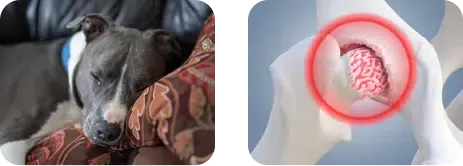
Signs of Cruciate Ligament Damage in Dogs
Cruciate ligament disease tends to occur in two forms.
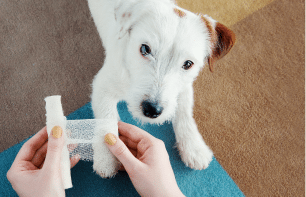
The first, chronic degenerative form, occurs in dogs with mild ongoing lameness, which may initially resolve with rest and pain relief, however recurs and contributes to significant ongoing arthritis.
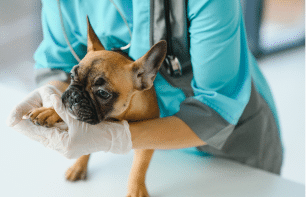
The second, acute form, occurs in dogs with sudden onset lameness. These injuries are often more obviously painful.
Symptoms of Cruciate Ligament Injury in Dogs Include:

Lameness (limping) in the hind limbs.

Toe touching at rest – the dog is not properly weight-bearing but just touching the toe to the ground.

Reluctance to walk or exercise.

Noticeable reduction of muscle mass (muscle atrophy) around the knee.

Whimpering or yelping when bearing weight on the affected leg.
Interesting Facts About Cranial Cruciate Ligament Disease in Dogs
01
It appears slightly more often in middle-aged, female dogs.
02
In giant breeds, it tends to appear at a younger age – possibly because of more rapid degeneration of the cruciate ligament.
03
In small breeds, it tends to appear at an older age – possibly because of slower degeneration of the cruciate ligament.
04
It was once believed to occur solely as the result of trauma to the knee like in humans. It is now believed that the majority of dogs with cruciate ligament injuries are predisposed due to inherent weakness of the cruciate ligament.
How to Diagnose Cruciate Ligament Injury in Dogs
An injured cruciate ligament in a dog can be diagnosed by a Sydney Animal Hospitals veterinarian. As affected animals are often very sore, sometimes sedation or anaesthesia is required to examine the knee thoroughly.
Radiographs are used to confirm symptoms, assess the viability of other joints in the leg, and to plan surgery.
How Is Canine Cruciate Ligament Injury Treated?
Surgery is the mainstay of treatment for cruciate ligament rupture. Our veterinary surgical services include inspecting and cleaning the joint, removing any damaged cartilage or artificially stabilising the knee.
The type of dog knee surgery performed will depend on the nature of the injury and the size of your dog. Pain relief, before and after surgery, is very important, as is post-operative rest and eventually,
physiotherapy.
It is important that cruciate ligament surgery is tailored to your dog after a full veterinary examination. There is no one-size-fits-all approach to this condition.
Other important components in the treatment plan include:
- Chondroprotective agents to promote joint health.
- Anti-inflammatory agents to reduce inflammation in the joint and associated pain.
- Post-operative exercises.
What Happens if Your Dog Doesn’t Get ACL Surgery?
Very occasionally, a dog that has a ruptured cruciate ligament will no longer limp. However, arthritis will occur due to the ongoing instability resulting in lameness reappearing, often within a few months. This lameness is usually permanent, progressive and worse than at the time of initial lameness.
Some degree of arthritis will result even where surgery is performed, but as the joint is stabilised, this arthritis is much less severe.
Ensure a Smooth Recovery for Your Pet
Our Rapid Recovery Pack is designed to support your pet's healing journey post-surgery. With comprehensive care tailored for a faster, more comfortable recovery, you can rest assured your furry friend is in safe hands. Ask us about how we can help your pet bounce back stronger and healthier.
Post-Operative Cruciate Ligament Care For Dogs
Your pet must be strictly rested for the first six weeks following cruciate ligament surgery.
This means:
- Your pet should be confined to a small room or quiet area for the six-week rest period
- Only short (maximum 10 minutes) exercise is allowed – your pet may be slow walked on a leash in order to go to the toilet
- Walking up and down flights of stairs, jumping up or any uncontrolled activity
- Slipping when walking on wet or smooth surfaces as this places strain on the recovering limb
After surgery, there are a number of good exercises you can perform with your pet once any bandages have been removed. To best help your pet make a speedy recovery you must:
- Allocate time for two or three exercises sessions each day.
- Concentrate on all joints in the injured limb, not just the affected knee joint.
- Flex and extend each joint on the injured limb a minimum of 10 times.
- Cycle the injured limb through its full, pain free range-of-motion 10 times.
- DO NOT FORCE THE JOINTS OR CAUSE PAIN. It is very important that you gently manoeuvre the limb through a range of motion that causes your pet no discomfort
There are a number of follow-up and general strengthening exercises that you can perform with your pet after the six-week rest period has expired. It is also highly recommended that your pet to receives a radiograph of the operated joint to see how the healing process is coming along.
1) Controlled leash walks for periods of no longer than 20 minutes twice a day.
2) Sit and stand exercises. These can be done during leash walks simply by commanding your pet to “sit” and, just before it assumes the sitting position, the “walk- on” command is given. This routine should be repeated 10 or more times every walk as it helps build up the rear leg muscles, which is highly important in your pet’s rehabilitation.
3) Running and jumping should be avoided until at least week 12 of recovery.
Between weeks 8 and 12:
- Exercise can be increased slowly to 30-minute to 40-minute sessions.
- Deep-water swimming is encouraged – no longer than 15 minutes several times a week.
Keep in mind that pets recover at different rates but if your pet is not at near normal activity levels by weeks 12–16 an appointment should be made for reassessment.
At Sydney Animal Hospitals, we recommend regular health check-ups so that we can:
Get Trusted Dog ACL Surgery at Sydney Animal Hospitals
As joint instability leads to worsening arthritis over time, it is important for dogs with lameness to be assessed as early as possible.
Our experienced veterinarians are highly skilled at diagnosing a dog ACL injury and determining if canine cruciate ligament surgery is the best option for your dog, and we’ll create a treatment plan and recovery schedule to suit their needs.
Early intervention prevents arthritis – so don't wait!
7 Sydney Animal Hospital Locations Across Sydney
Sydney Animal Hospitals have 7 locations across Sydney for your convenience
Newtown
Open 7 days
Inner West
Open 7 days
1A Northumberland Ave,
Stanmore NSW 2048
(02) 9516 1466
Norwest
Open 7 days
8/1 Celebration Dr
Bella Vista NSW 2153
(02) 8883 0411
Kellyville
Open 7 days
106 Windsor Rd,
Kellyville NSW 2155
(02) 8883 0533
Baulkham Hills
Open 7 days
472 Windsor Rd,
Baulkham Hills NSW 2513
(02) 9157 5557
Newport
Open 7 days
Corner of 1 Palm Rd, Barrenjoey Rd
Newport NSW 2106
(02) 9997 4609
Avalon
Open 7 days
710 Barrenjoey Rd,
Avalon NSW 2107
(02) 9918 0833
Frequently Asked Questions
Common questions pet owners ask about cruciate ligament surgery for dogs
How Do I Know if My Dog Has Torn Its Cruciate?
A torn canine cruciate ligament often presents as a sudden hind leg limp, hopping, stiffness when rising, or sitting with the leg out to the side. Other signs include swelling on the inside of the knee, clicking sounds, and a reluctance to jump or walk. Diagnosis is confirmed by a veterinarian via a physical exam or X-ray.
What Breeds Are Prone to Cruciate Ligament Tears?
ACL injuries are most common in medium to large-breed dogs over the age of four, such as Labradors, Golden Retrievers, Rottweilers, Bull Terriers, German Shepherds, and Mastiffs.
Does My Dog Need Surgery for a Partial Cruciate Tear?
Yes. Instability of the knee even from a partial tear can result in development of severe arthritis over time which can significantly reduce quality of life. Therefore, ACL surgery for dogs is usually recommended for partial cruciate tears as well as full cruciate ligament repairs.
Can My Dog Recover From a Torn ACL Without Surgery?
It is very uncommon for a cruciate tear to heal without surgery. Ligaments themselves have poor capacity for healing and so even in the best of circumstances, similar to humans, ligament healing without assistance is uncommon. There are also a few differences to humans which prevent successful healing without surgery. Dog anatomy is different and results in the joint angle being always slightly bent, even when standing straight. This causes ongoing tension in the ligament for neutral weight bearing in comparison to people who stand straight. Additionally, dogs can’t use crutches! Therefore, in the healing phase they are always putting some pressure through the ligament which inhibits its ability to rest and heal.
What Other Treatment Options Are Available for Dogs with Cruciate Ligament Injuries?
Treatment options may include surgical interventions like Tibial Plateau Leveling Osteotomy(TPLO), Tibial Tuberosity Advancement (TTA), or extracapsular repair, as well as non-surgical approaches such as rest, physical therapy, pain management, and weight management.
How Do I Prepare My Dog for Cruciate Surgery?
Getting your dog ready for ACL surgery involves pre-op fasting (usually no food after midnight), bathing them 1–2 days prior, and setting up a recovery space at home with rugs or mats. It’s best to reduce activity in the lead-up, ensuring vaccinations are current, and prepare slings or harnesses for post-op mobility.
How Much Does Cruciate Ligament Dog Surgery Cost in Sydney?
The cost of a cruciate ligament operation in dogs varies depending on the type of surgery, your dog’s size and breed, and the complexity of the procedure. Generally, prices range between $2,500–$8,000. It’s important to also consider pre-surgical diagnostics (like X-rays) and post-operative care, including medication and follow-up appointments, which can add to the total cost. To get an accurate quote for your dog’s needs, please contact our clinic for a consultation.
Providing Animal Hospital Care with Flexible Payment Options
Like any member of your family, an unexpected illness or injury can happen to your pet at any time and with that comes unforeseen expenses.
To help with these unexpected costs Sydney Animal Hospitals offer a number of payment options such as Afterpay, Zip, VetPay, cash and credit card.
If you have pet insurance you may be able to claim on the spot and only pay the gap with GapOnly™
SYDNEY ANIMAL HOSPITALS ACCEPT



